In March of 2023, when I threw myself into the idea of living in a converted cargo van, I was not thinking about having a custom design built. My first step was scouring the internet for built vans for sale and looking at Class B standard designs offered by RV manufacturers. Truthfully, there are many great van designs out there by large and small companies. Some of the large outfits include Thor, Winnebago and Airstream.
I don’t believe in re-creating resources that already exist, so here is a link to a Complete List of Class B RV Manufacturers created by the travel blog, We’re the Russos.
My decision to go with a custom design was influenced by a couple of factors. First, I was planning on living in the van full-time. Second, I am an architect who specializes in space planning and can’t look at a design without thinking about ways to make it better.
When I was considering standard van designs, I was looking for an open design that maximized natural light, made the interior feel as large as possible, and used the space synergistically and efficiently.
Like I said above, there are a lot of good designs. But there is a reason they call Class B conversions “Campervans”, most are not designed to live out of full-time. The layouts often lacked storage or closets for clothing storage. This was an important consideration for me since I didn’t want to live out of a suitcase. In addition, the beds and wet baths ate up a lot of the interior living space and limited the placement of windows.

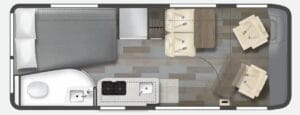
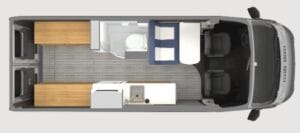
With a custom design, I was able to carefully decide how to use the limited interior space. For example, I only included seats for the driver and one passenger since it was only going to be myself and my dog, Riley. Of course, this means my van can only support one person or a couple since there is only seating for two and a full size bed.
In my search for a built van or standard van design, I came upon a layout offered by a Canadian manufacturer, Wilderness Vans, that came close to what I wanted. Their design used a power lift bed that raised to van ceiling during the day and lowered the bed to sleep on at night. Since I was looking at the most efficient use of space, I reached out and was connected with one of their American dealers, Rover Vans located in Glenview, Illinois.
However, Wilderness Vans standard design was not quite right for what I needed, and I asked about making some changes. I thought the changes were fairly minor, but it turned out that the process would have included paying for new drawings and other added expenses. Since I am an architect, I offered to do the new drawings but Wilderness Vans, understandably, was more comfortable using their own resources.
I was about to abandon this avenue and keep looking when I found out that Rover Vans built custom van designs. I started a discussion with Rover Vans owner, Piotr, and found a partner who would work with me on a van design meeting my objectives.
I could not have been happier with the outcome. Piotr agreed to let me do the van drawings and his expertise on van conversions was invaluable. A bonus was that Rover Vans was located in the Chicago area so I was able to consult with them in person and stop by their shop during the actual build out.
Many architects dream of designing and building their own home. However, most never do because of the cost and time commitments. In my case, I got the satisfaction of designing one very complicated room for myself.
